/tice-news-prod/media/agency_attachments/EPJ25TmWqnDXQon5S3Mc.png)

/tice-news-prod/media/member_avatars/2024/12/03/2024-12-03t063808930z-anil-kumar.png )
 Follow Us
/tice-news-prod/media/media_files/2026/03/03/rail-tech-2026-03-03-12-17-10.jpg)
India’s startup ecosystem has long looked at government infrastructure as both a challenge and an opportunity. This week, that opportunity became far more tangible.
Union Railways Minister Ashwini Vaishnaw has formally invited startups, innovators, and technology entrepreneurs to collaborate directly with Indian Railways through the newly launched Rail Tech Portal—calling it the primary “digital way of accepting solutions.”
In simple terms, the Railways is saying: If you have a meaningful technology solution, bring it to us.
And this time, the pathway is structured, digital, and financially backed.
A Structural Shift: Rail Tech Policy Under 52 Reforms
The Rail Tech Portal has been introduced as part of Reform Number Three under Indian Railways’ ambitious “52 Reforms in 52 Weeks” initiative. But this isn’t just another government scheme announcement—it marks a clear shift in how innovation will be sourced and adopted.
Traditionally, government procurement has been driven by rigid specifications and long procedural cycles. The new Rail Tech Policy changes that dynamic. It introduces a single-stage, detailed proposal submission mechanism where:
Startups can submit innovation proposals digitally
Railway departments can post specific innovation challenges
The entire evaluation process is designed to be transparent and streamlined
The portal functions as a fully digital, end-to-end system—removing the need for navigating complex offline bureaucratic layers.
Vaishnaw stated that the model draws inspiration from successful innovation frameworks such as:
Innovations for Defence Excellence (iDEX)
Startup initiatives of the Ministry of Electronics and Information Technology
Telecom sector reforms
The aim is clear: remove procedural bottlenecks and build a scalable innovation pipeline within Indian Railways.
Bigger Grants, Real Scale, Long-Term Orders
One of the most significant aspects of the Rail Tech Policy is the financial support structure.
The scale-up grant has been increased more than threefold
The maximum grant for prototype development and trials has been doubled
In viable cases, Indian Railways will fund up to 50% of development cost
This dramatically changes the risk equation for startups.
But perhaps the most crucial piece:
If a pilot succeeds, it doesn’t stop at testing. Projects can move into long-term procurement orders, opening up substantial revenue opportunities.
For startups, this is not just experimentation. It is a real pathway to scale inside one of the largest railway networks in the world.
Massive Innovation Opportunities Across Rail Infrastructure

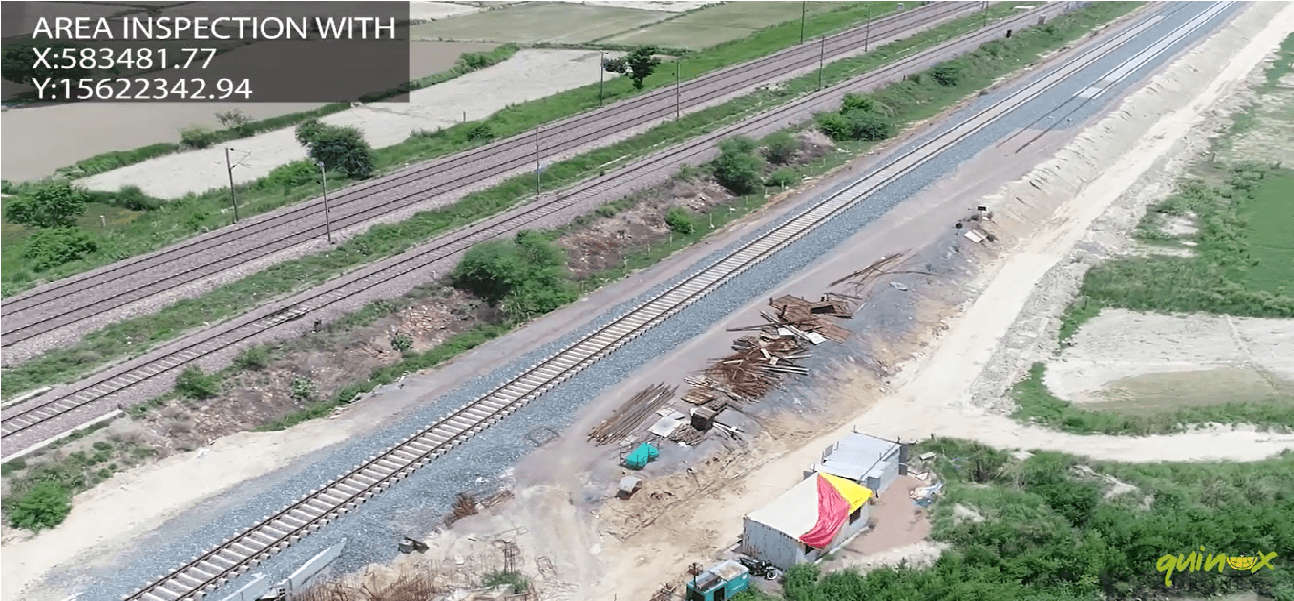
 With operations spanning thousands of kilometres and millions of passengers daily, Indian Railways presents one of the most diverse real-world deployment environments in the country.
The innovation areas identified are expansive and highly technology-driven:
AI-based Elephant Intrusion Detection Systems (EIDS)
AI-powered fire detection in coaches
Drone-based broken rail detection
Rail stress monitoring systems
Sensor-based load calculation in parcel vans
Solar panels on coaches
AI-enabled coach cleaning monitoring
Obstruction detection in foggy conditions
AI-driven pension and dispute resolution systems
The Minister cited a recent example from Kerala where CCTV footage helped authorities quickly apprehend culprits—highlighting how AI-enabled surveillance systems can enhance passenger security.
Beyond surveillance, predictive maintenance technologies using radar, infrared cameras, ultrasonic systems, and AI analytics are being positioned as tools to detect track deformation and electrical failures before accidents occur.
For deep-tech startups working in AI, IoT, robotics, predictive analytics, drones, and clean energy, this is access to a large-scale testing ground few sectors can match.
Reform Number Four: Digitising the Railway Claims Tribunal
Alongside the Rail Tech Policy, Reform Number Four focuses on governance transformation.
The Railway Claims Tribunal (RCT), constituted under the Railway Claims Tribunal Act, 1987, operates 23 benches across 21 cities, with its Principal Bench in Delhi. It handles claims related to railway accidents, untoward incidents, compensation, goods loss, and fare refunds.
Now, the government has announced a complete digitisation and AI-enabled transformation of the RCT system within 12 months.
The new E-RCT system will include:
24×7 online e-filing with SMS and email acknowledgements
A centralised Case Information System (CIS) with real-time tracking
A Document Management System (DMS) with digitally signed records
Hybrid hearings (physical + virtual)
Automated alerts and compliance tracking
This reform aims to reduce case pendency, lower litigation costs, and improve transparency. If successful, similar digital frameworks may be extended to other tribunals, including the Central Administrative Tribunal.
A Broader Vision: Inclusive, Scalable Innovation
Vaishnaw positioned the Rail Tech Portal within the broader vision of inclusive innovation—where “science meets scale.” The message was clear: startups must have a structured and simplified pathway to engage with large public systems.
Beyond railway reforms, the Minister also urged digital platforms to take greater responsibility for online safety, content governance, and fair revenue sharing for creators, noting that non-adherence could invite legal interventions, as seen globally.
Why This Moment Matters for India’s Startup Ecosystem
For India’s startup ecosystem, the Rail Tech Policy represents more than procurement reform.
It signals a shift in how large public institutions collaborate with private innovators.
With:
Digital-first submission mechanisms
Enhanced grant support
Structured trials
And potential long-term orders
Startups now have a clearer route to build, test, and scale solutions inside one of the world’s largest transportation systems.
As Indian Railways accelerates its technology transformation journey, the Rail Tech Portal could emerge as a landmark platform—connecting government scale with startup agility, and opening new growth avenues while modernising critical national infrastructure.
For founders building in deep tech, mobility, AI, infrastructure tech, or clean energy, this may well be one of the most significant government-backed innovation opportunities currently on the table.